The science behind Mendi

Mendi's neurofeedback technology is built on decades of peer-reviewed fNIRS research.

Trusted by Leading Institutions

What is fNIRS?

fNIRS stands for functional Near-Infrared Spectroscopy, a non-invasive brain imaging technology that measures brain activity by detecting changes in blood oxygenation. Mendi uses fNIRS to measure blood oxygenation in your prefrontal cortex: the part of your brain that controls focus.

How fNIRS measures prefrontal cortex activity

Step 1

Light Emission

Mendi emits safe near-infrared light at dual wavelengths: 660nm and 805nm that passes safely through the forehead, reaching prefrontal cortex tissue below the skull without radiation or electrodes.

Step 2

Absorption & Scattering

As light passes through brain tissue, the amount absorbed differs between oxygenated and deoxygenated blood. Active brain regions draw more oxygenated blood, revealing changes in prefrontal cortex activation.

Step 3

Signal Processing

Mendi's processor converts raw light data into a live hemodynamic signal. That signal feeds directly into the training game, translating prefrontal hemodynamic changes into a live feedback signal.

Step 1

Light Emission

Mendi emits safe near-infrared light at dual wavelengths: 660nm and 805nm that passes safely through the forehead, reaching prefrontal cortex tissue below the skull without radiation or electrodes.

Step 2

Absorption & Scattering

As light passes through brain tissue, the amount absorbed differs between oxygenated and deoxygenated blood. Active brain regions draw more oxygenated blood, revealing changes in prefrontal cortex activation.

Step 3

Signal Processing

Mendi's processor converts raw light data into a live hemodynamic signal. That signal feeds directly into the training game, translating prefrontal hemodynamic changes into a live feedback signal.

What users experience after 8 weeks

Improvement in sustained focus

42%

Reduction in perceived stress

31%

Improved mood and emotional balance

16%

Better general wellbeing

51%

Results are based on aggregated in-app data and self-reported outcomes from thousands of users who completed eight weeks of Mendi neurofeedback training. Improvements were measured using validated scales (ACS, WHO-5, PSS-10, GAD-7, PHQ-9). Individual results may vary.

The studies

Independent peer-reviewed research

Mendi is built on fNIRS neurofeedback principles studied in independent research. Some of these studies used Mendi directly; the rest establish the science behind it.

Mendi device used

Studies using the Mendi device

Independent research confirms the Mendi sensor accurately measures real prefrontal-cortex activity. The signal you train with is validated.

Mendi's sensor validated for measuring working-memory load

Device validationWorking-memory loadMendi device used

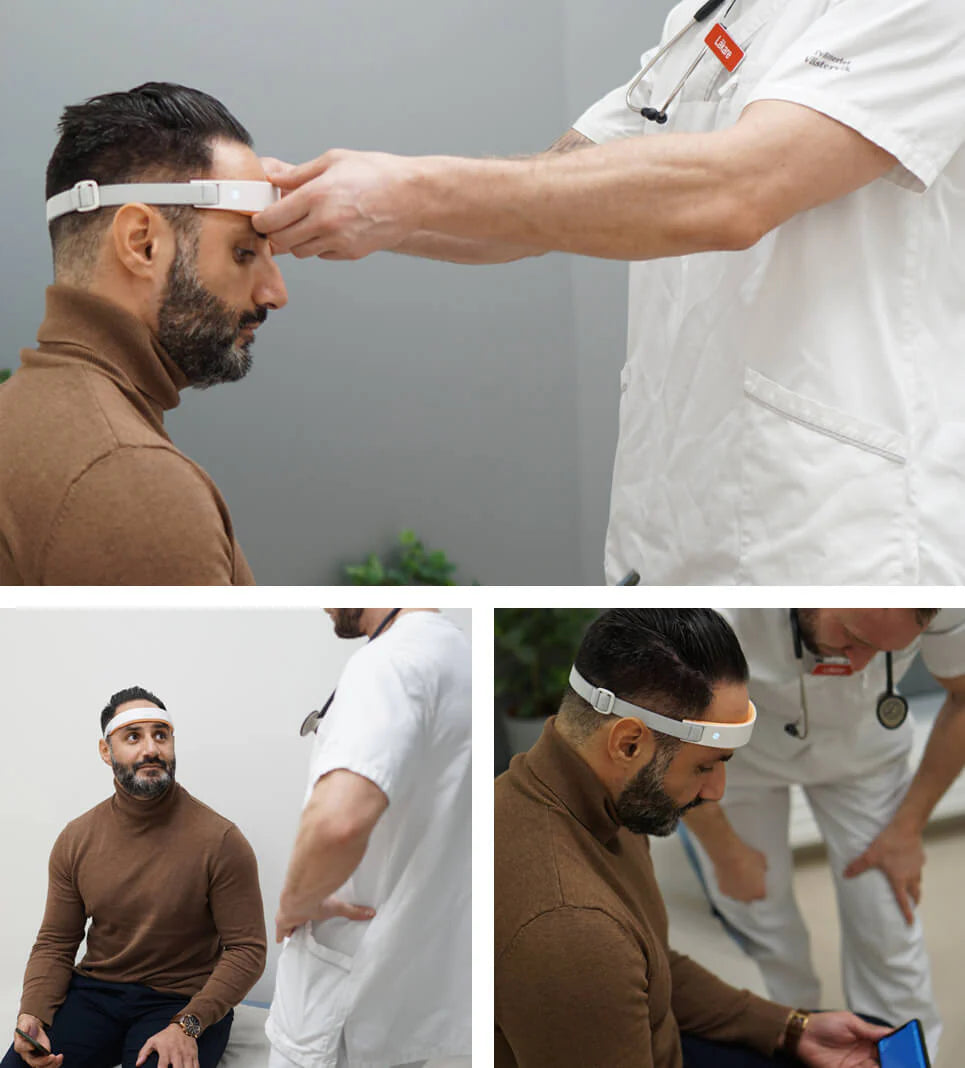
Independent validation showing the mobile Mendi fNIRS device reliably detects differences in oxyhemoglobin response between low and high working-memory loads in the prefrontal cortex. It confirms the sensor measures what it claims to.

Boere, Hecker & Krigolson (2024). Validation of a mobile fNIRS device for measuring working-memory load in the prefrontal cortex. International Journal of Psychophysiology.
Mendi detected the cognitive cost of multitasking

Cognitive loadMultitaskingMendi device usedN=31

31 undergraduates played Tetris under single-task versus multi-task conditions while wearing the Mendi headband. Subjective load rose and performance dropped under multitasking, the study shows Mendi tracks that load-versus-disengagement dynamic.

Boere et al. (2024). Measuring cognitive load in multitasking using mobile fNIRS. NeuroImage Reports. PMC12172848
Principle research

Research on the fNIRS neurofeedback principle

Mendi works on the same principle these studies test: fNIRS neurofeedback. Run on other equipment, they show the method itself works. It's the science Mendi is built on.

One note for all four: they used fNIRS devices other than Mendi, so they back the method rather than Mendi specifically. Designs and sample sizes vary, the specifics are on each card.

A single session of fNIRS-neurofeedback changed brain activity during a later working-memory task

Single sessionSham-controlledN=62Different device

A randomized sham-controlled study of the left dorsolateral prefrontal cortex. Versus sham, the training group showed enhanced DLPFC activity; behavioural working-memory performance did not significantly differ. The neural mechanism responded to a single session; behaviour did not transfer in this design.

Yang et al. (2024). Progress in Neuropsychopharmacology & Biological Psychiatry, 132:110968. PubMed 38354898

Reduced impulsive errors after 8 sessions in highly impulsive adults

Subclinical impulsivityN=208 sessionsDifferent device

20 adults high in subclinical impulsivity were randomised to fNIRS-neurofeedback or an EMG-control, completing 8 sessions over 2 weeks in a VR classroom. The neurofeedback group showed significantly fewer commission errors and increased prefrontal oxygenation.

Hudak et al. (2017). Frontiers in Human Neuroscience, 11:425. DOI 10.3389/fnhum.2017.00425

Practical and well-tolerated across a 12-session program in children

Children12 sessionsPilotDifferent device

A 3-arm pilot (9 children per arm). After 12 NIRS-neurofeedback sessions, the group showed within-group attention improvements at 4 weeks and 6 months, with no significant between-group differences. Framed as feasibility, practical and well-tolerated, not efficacy.

These were children diagnosed with ADHD. Mendi is a wellness device, not a treatment for ADHD or any condition. If you or your child has an attention disorder, talk to a healthcare provider first.
Marx et al. (2015). Frontiers in Human Neuroscience, 8:1038. DOI 10.3389/fnhum.2014.01038

A single training session produced working-memory gains that held at one week

Spatial working memorySham-controlledN=60Different device

A randomized sham-controlled study (60 adults) targeting the DLPFC. Versus sham, the training group showed increased DLPFC activation and improved spatial working-memory and attention, maintained at one week. A direct contrast to Yang: single-session results vary across studies.

Li et al. (2023). Neurophotonics, 10(2):025011. PMC10234406

The research here includes studies that used Mendi directly and studies on the same fNIRS method using other devices. Mendi is a wellness device, not a medical treatment. It isn't intended to diagnose, treat, cure, or prevent any condition.

Lab-grade brain measurement, built for daily use.

Lightweight design

Built for short and long sessions. Low-profile, ergonomic, and comfortable on the forehead.

CE & FCC Certified

Mendi is safe for regular use, and meets the electromagnetic interference standards.

Lab-grade brain measurement, built for daily use.

fNIRS

Research-validated measurement, built for daily use.

Automatic body detection

Signal validated against research-grade fNIRS in peer-reviewed studies

72,000+
Active users
5+
Publications
15+
Research institutions
CE & FCC
Certified

Why portable fNIRS matters

Traditional fNIRS systems cost tens of thousands of dollars and require lab environments. Mendi brings the same measurement technology to a device you wear at home.

Lab only

Traditional fNIRS

$30,000–$100,000+ per system

Requires trained specialist to operate

Bulky cap, lab environment only

Daily use

Mendi

Consumer-accessible price point, no subscription

Automatic setup: detects skin contact, starts recording

Lightweight, wearable for daily sessions

Field-ready

Research applications

Mental workload assessment outside the lab

Longitudinal sustained attention studies

Prefrontal cortex cognitive performance tracking

Lab only

Traditional fNIRS

$30,000–$100,000+ per system

Requires trained specialist to operate

Bulky cap, lab environment only

Daily use

Mendi

Consumer-accessible price point, no subscription

Automatic setup: detects skin contact, starts recording

Lightweight, wearable for daily sessions

Field-ready

Research applications

Mental workload assessment outside the lab

Longitudinal sustained attention studies

Prefrontal cortex cognitive performance tracking

NEUROSIGHT PLATFORM
The complete toolkit for fNIRS research: Record. Visualize. Export.

The complete toolkit for fNIRS research: Record. Visualize. Export.

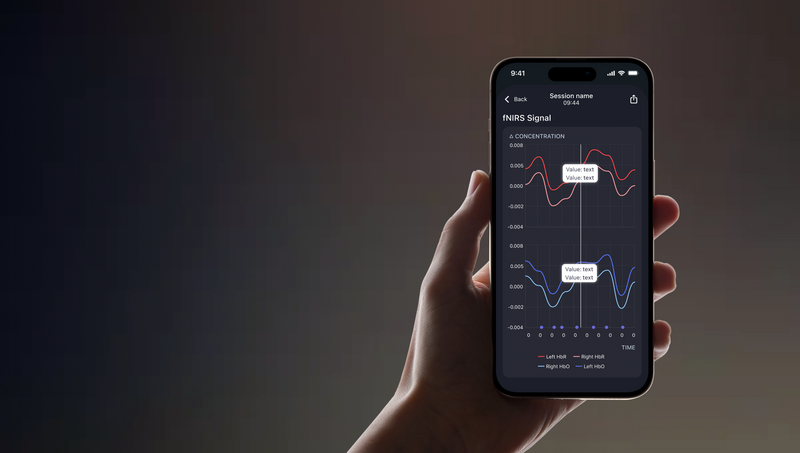
Raw fNIRS signal, session logs, and hemodynamic data, exportable and ready for analysis in MATLAB and Python.

Mobile App

Mobile App

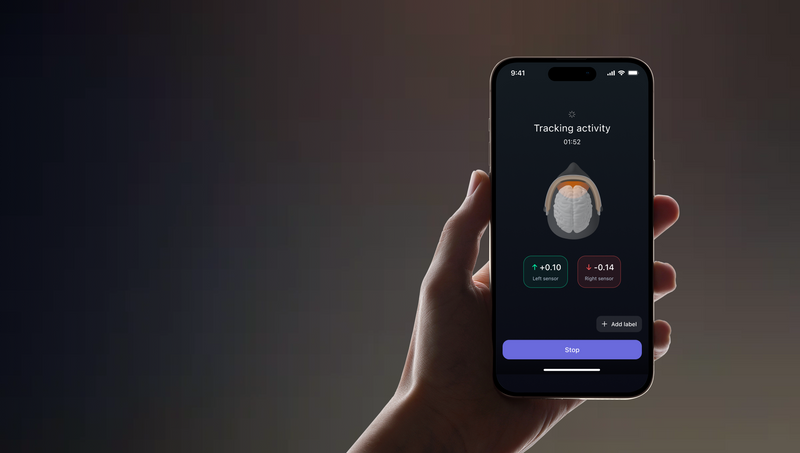
Record and tag brain activity in real time, with secure syncing for flexible data collection

Get access to Mendi Neurosight for your research

Available to universities, clinical labs, and research institutions. We support co-research, data-sharing, and custom integrations.

Research Partnerships

Co-research agreements, joint publications, and data-sharing protocols for academic and clinical programs.

Neurosight Platform Access

Structured field data collection, multi-participant management, and IRB-compatible governance.

Technical & Integration Support

API docs, SDK access, and direct engineering support for custom integrations and signal processing pipelines.

Request Research Access

Ready for calmer, more focused days?

  • Improve focus & attention
  • Measurable progress tracking
  • No subscription fees
4.7/5from 72,000+ reviews